Showing posts with label Nerve Interference. Show all posts

Wednesday, 4 March 2015

Mastering the Tough Stuff

Usain Bolt receives a masterful chiropractic adjustment
When I graduated from Life Chiropractic College - West 30 years ago, I thought I had a pretty good handle on what it took to be a chiropractor.  Graduating near the top of my class I certainly had a lot of knowledge.  I also thought I had the skill to give a pretty good chiropractic adjustment.  When I started practice a few months later, I quickly realized that my knowledge and skill levels were far less than what I needed to be a great chiropractor.  There are still many days when I'm not sure I have arrived.  I still have much to learn about being a chiropractor.

In my early practice years I would go to seminars and watch to see how successful chiropractors conducted themselves.  The truly masterful adjusters had been in practice for years and regularly saw many, many patients.  People were attracted to their practices because their adjustments were extraordinarily effective.  Patients got results from these chiropractors they didn't get elsewhere.  Most of these chiropractors had one focus - to deliver outstanding chiropractic adjustments.  How did they get to be great adjustors?  They adjusted a lot of people and constantly focused on how they were providing those adjustments.  They weren't satisfied with being mediocre.  It was a constant that I observed in those who delivered outstanding adjustments regardless of which chiropractic technique they used. 

In Malcolm Gladwell's book, "Outliers", he proposes that in order to become truly great in a given field, a person needs to practice for 10,000 hours.  This applies to athletes, musicians, computer programers, scientists and, by extrapolation, even chiropractors.  While there may be holes in his theory, my experience is that when I had been in practice for 10,000 hours my skills where exponentially better than when I started practice.  When I had delivered 10,000 adjustments, my adjustments were amazingly more effective than when I thought I was a good chiropractor after graduating.  As I look back there has been a constant improvement of the effectiveness of my adjustments over the years.  I believe I am giving better adjustments today than I gave 5 years ago.  I see the same thing in my associate doctors.  They are becoming better and better with constant practice.  The more adjustments they give, the better the adjustments they give. 

I'm moved to reflect on the importance of mastering the difficult skill of the chiropractic adjustment because of a growing trend in the chiropractic profession.  There are groups of chiropractors, even here in Alberta, who are pushing to have chiropractors prescribe drugs.  Now there is a time and place for drugs to be used, but that should remain in the hands of those who's focus is medication - the medical profession.  There are real dangers for chiropractors being able to prescribe pain killers and muscle relaxants.  One such danger is that it is too easy.  Young chiropractors who have not yet mastered the chiropractic adjustment will be drawn to prescribe drugs to make up for the deficiency in their adjusting skills.  As a result they will prescribe more and adjust less never becoming masters and their patients will be worse off for it.  The default for most people, including professionals, is to take the easy road.  Sadly, when chiropractors are not masterful adjustors, patients usually don't get the results they were seeking and think chiropractic doesn't work.  Even more significantly the powerful effects of chiropractic on overall health are missed.  The great potential for these people has been denied because of the failure of the chiropractor to give the patient a great adjustment.

It has been fortunate for the chiropractic profession that we have not been able to prescribe drugs.  It has forced us to refine and master the chiropractic adjustment.  The result is that chiropractic has developed an enviable record of both results and safety.  This has not been an easy road for my profession, but it has been the right road.  The beneficiaries of taking this difficult path are the many patients who have had life changing experiences because of masterfully delivered chiropractic adjustments.  I pray that my patients are among those people.


Monday, 23 June 2014

Does Everyone Need to See a Chiropractor?

When people first find out I'm a chiropractor, there are two common responses.  First, is that they have been to a chiropractor and want me to "crack" their back or neck for them, often implying I should do it right there in the restaurant or wherever we may be.  Second are people who say, "I don't need to see a chiropractor.  I don't have back pain."  Should people who don't have pain go see a chiropractor?

It wasn't all that long ago that people only saw medical doctors when they were sick.  They only consulted a dentist when they had a tooth ache.  I'm old enough to remember those days.  The idea of consulting a health professional for prevention of problems is a fairly recent phenomenon.  Most of our society now sees the logic in seeing an MD, dentist, or optometrist before problems arise for either prevention or early treatment.  Using the same logic, it also makes sense to see a chiropractor before back pain, neck pain or headaches become problems.

Since every person has a spine, everyone has the potential to develop spinal problems.  Statistically, 80% of Canadians will experience back pain over the course of their lifetime.  For many of those people it will be debilitating; interfering with their ability to work or perform activities of daily living.  But the effects of spinal problems are not limited to pain.  Abnormal function of spinal joints results in irritation to adjacent spinal nerves.  This produces alteration of nerve function through the entire path of that particular spinal nerve.  The result can be health problems distant from the spine itself.  A person can suffer detrimental effects of spinal problems without actually having pain in their spine.

Chiropractors use the term, Vertebral Subluxation, to describe abnormally functioning spinal joints with associated nerve irritation.  It may or may not be accompanied by pain.  Chiropractors are uniquely trained to detect and correct Vertebral Subluxations.  Like most conditions, Vertebral Subluxations can be most effectively treated when they are detected early.  Once abnormal spinal joint function becomes chronic, associated muscles adapt patterns where they are either too tight or too lax.  The ligaments of the joints are weakened.  Blood supply to the joints is altered as well.  It's also significant that chronically irritated spinal nerves heal very slowly.  Consequently detecting and correcting Vertebral Subluxations early, even before there is associated pain, makes a lot of sense.  Seeing a chiropractor when you don't have back pain, neck pain or headaches is as logical as seeing a medical doctor when you aren't sick or a dentist when you don't have a toothache or an optometrist when you can see well.  


If you are the type of person that only consults a health professional when they have an obvious problem, you likely won't grasp the logic of seeing a chiropractor when you don't have pain in your back, neck or head.  But that doesn't mean that you don't have spinal problems.  Waiting until you have pain can result in much more damage to the tissues and prolonged treatment.  As well when treatment is delayed the outcomes are often much less desirable.

As always whether you choose to see a chiropractor when you don't have pain is up to you.  But the logical approach is to get checked and assure your spine is working as well as it can so you don't end up with debilitating or chronic spinal problems.  Regular chiropractic adjustments should be part of your healthy lifestyle.


Wednesday, 18 September 2013

You Have Both a Right and a Left

It came as a bit of a surprise to me when I found out that when practicing, pro golfers will hit a bucket of balls right handed and then a bucket left handed, or vice versa.  This should not have surprised me because from a conditioning and biomechanical stand point, it makes perfect sense.  As humans we tend to be very one handed but using one side predominately can result in a host of problems.  By hitting balls both ways the pros are trying to minimize the possibility of these problems happening and at the same time improve their overall performance.  Given that I really can't hit a golf ball decently right handed, I can only imagine the challenge hitting it left handed.

Human balance can be thought of in two ways.  The first is whether or not a person has equilibrium.  That is whether they can remain upright.  If you lose your balance you fall down.  The second type of balance is whether a person has symmetry.  That implies the body having equal strength and mobility from one side to the other or front to back.  Having equilibrium is probably the most important type of balance, but having symmetry is important to having optimal equilibrium.  The two are related and both are important aspects of health.

The type of balance the golfers are working on when hitting balls both right and left handed is symmetry.  By doing this muscles and joints on both sides of the body are utilized.  Most significantly the "core" of the body is developed in a symmetrical manner.  This is particularly important for proper spinal function.  The nervous system also benefits tremendously when activities are done both right and left handed.

As a chiropractor, I see many spinal problems that are the result of people repetitively doing things one handed or one direction only.  When muscles are more developed on one side of the body, or more on the front or back, the joints of the spine move abnormally.  This results in the development of vertebral subluxations where there is not only a loss of joint function but altered nerve conduction as well.  A whole host of health problems can result.

It's not easy to use the body symmetrically.  Most of us are very one handed and it takes real effort to use the body in a balanced way.  It is particularly important to try to be balanced with the activities we do the most.  That means looking at the way we do our work and recreational activities.  For example I had to make a conscious effort to hold my Activator Adjusting Instrument an equal amount with either hand.  I had to train myself to work from both sides of the adjusting table.  By doing this over time my left hand has become almost as strong and coordinated as my right hand.  It certainly wasn't when I started doing this years ago.  I believe that doing this has not only prevented injuries but is a factor in my overall health.

It's important to also try to achieve symmetry when exercising.  This is particularly significant when rehabilitating injuries.  Stretching and strengthening should be done on both the right and the left.  Of equal importance is balancing the front and the back of the body.  Did you know that walking on the ground provides much more symmetry than walking on a treadmill?  When walking on the ground both flexor and extensor muscles of the lower extremity are used as opposed to the treadmill where the machine does most of the extension for you and the flexor muscles develop more than the extensors.

Take a tip from the pros to improve both your performance and your health by using your body in a balanced manner.  You will have fewer injuries, recover faster, have improved coordination, and better equilibrium.  Balance is part of a healthy chiropractic lifestyle.   It's not easy, but you will be better for it.

Monday, 8 April 2013

What Makes Chiropractic Adjustments So Powerful?

A chiropractic adjustment is a very simple procedure.  The chiropractor analyzes a patient's spine for an area that has lost its proper position and motion.  Then a very quick, light thrust is applied in a specific direction to this area.  This may be done to one or several areas of the spine and the patient's spine has been adjusted.  Both the analysis and the procedure are quick and simple.

Most people visit chiropractors because of pain in the back or neck.  It's easy for them to make the connection between pain in the spine and the benefits of adjusting the spine.  But many of these people, who've come for relief of back and neck pain, find other positive things happen after receiving chiropractic adjustments.  Some examples from my practice over that past few weeks are:
  • the child who is no longer constipated
  • the man who no longer gets heartburn at every meal 
  • the lady who now sleeps comfortably through the night
  • the gentleman who no longer has constant hiccups
  • the baby who nurses without vomiting everything back up
  • the woman who can walk with her friends again without discomfort
  • the fellow whose jaw no longer "cracks" so loudly that it annoyed his family
  • the boy who no longer has chest pain and shortness of breath when he runs
There are many more examples I could list of positive, unexpected benefits patients in my office have experienced recently.  In each case, the person was analyzed for spinal problems and given simple chiropractic adjustments.

That a chiropractic adjustment can produce such a wide range of positive effects can seem amazing.  The power in the adjustment is not in the technique the chiropractor uses or even in the force that the chiropractor puts into the spine.  The power comes from what the body does with that force.  When areas of the spine have lost their proper position and motion it means that a Vertebral Subluxation is present.  Vertebral Subluxations also involve irritation of the adjacent spinal nerves.  Once the nerves are irritated, all areas of the body that depend on those particular nerves are negatively affected.  A chiropractic adjustment applied to a Vertebral Subluxation restores normal position and motion which then results normalization of the spinal nerves.  Once nerve function returns, truly amazing things can happen in the body.  The body can again function the way it was designed to.  The chiropractic adjustment can be likened to turning on a switch that gets the body working again.  Chiropractic adjustments turn the nerves on.  It's that simple.  That's why chiropractic adjustments are so powerful!

Wednesday, 20 February 2013

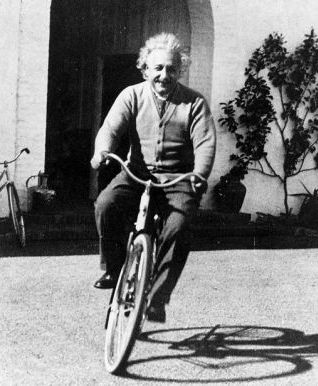
Life is Like Riding A Bike

"Life is like riding a bicycle.  To keep your balance you must keep moving."  Albert Einstein


Albert Einstein was a pretty smart fellow and not just in math and science.  When reading quotes from him, I have to conclude that he had a great grasp of what life is all about.  The quote above is certainly in line with a healthy chiropractic lifestyle.

Balance is a key to both physical and mental health.  I don't know whether Albert Einstein was referring to one or both of these areas of life when he made this statement.  Motion is crucial for health in both areas.

In physical health it's easy to see how motion is a critical element.  Motion tones our nerves and muscles and it keeps our circulatory system functioning.  As we move our body systems become coordinated so everything works together.  That is the prerequisite to having physical balance.

As a chiropractor, I am very focused on the how well my patients move.  The motion of the joints of the spine is particularly important.  Spinal joints that move either too much or too little will affect the nerves that exit the spine and go to all parts of the body.  This can lead to an imbalance in the nerves that control not only muscle activity but sensations such as pain and feelings as well as organ function.  When spinal joints loose their proper motion and the nervous system loses its balance, that is termed a vertebral subluxation.  Correcting vertebral subluxations with specific adjustments is what chiropractors specialize in.

Physical balance requires motion in more areas than just the spinal joints.  All the joints of the body must move properly and all the body's systems must be working together in a coordinated fashion.  Its the nervous system that assures the coordination of the entire body..

Being balanced mentally also requires motion.  Physical motion provides proper blood flow to the brain.  Through the blood the brain receives the oxygen, nutrients, and hormones necessary for it to work properly.  Also through physical motion the brain obtains stimulation from every part of the body.   Keeping mentally active is also necessary for to have mental balance.  Keep the mental "gears" turning through constant learning and stimulation to keep the mind healthy. 

A chiropractic lifestyle involves keeping the spine functioning properly as well as adopting healthy diet, exercise, nutrition, and sleep habit,   It's about managing physical, chemical, and emotional stresses so the body and mind can function the way they were designed to.  To be healthy we need to be balanced, physically and mentally.. Sitting in front of the TV in no way promotes balance.  Balance requires movement.  Take it from Albert Einstein, to be balanced we need to keep moving.  He was a wise man.

Tuesday, 1 January 2013

5 EASY STEPS TO BECOME UNHEALTHY IN 2013

If your New Year's Resolution is to become less healthy this year, I have 5 easy steps for you to take to reach your goal.

  1. Inactivity – Lack of physical activity will result in increased risks of circulation problems, heart disease, diabetes, digestive problems, sleep disturbances, muscle wasting, joint problems and mental health issues. It's not just physical activity you want to avoid but mental stimulation as well. Being a couch potato in front of the TV might be a great place to start.  This will minimize both your physical and mental activity levels.
  2. Poor Nutrition – Eat as much as you can of whatever looks good and tastes good. Go for high sugar, deep fried, highly salted, high calorie, processed and genetically modified foods.  Avoid natural foods, especially fresh vegetables (green = bad) and fruit.  Consuming large quantities of alcohol will also deplete your nutritional reserves.  Without essential building blocks the body is unable to repair itself and all its systems gradually breakdown.
  3. Poor Supplementation – Don't take any supplements.  Rely on the nutrient deficient foods you choose (see #2) to supply what your body needs, even though these foods don't have what the body needs.  Even more detrimental to your health is to take supplements that your body can't absorb or that are in forms that the body can't utilize. Choose low quality supplements that contain toxins and fillers. This is sure to stress the body chemically.
  4. Stress Response – Prolonged stress has been shown to be a causative factor in 8 of the 10 most costly illnesses. This includes cardiovascular disease, some cancers, gastrointestinal disorders, respiratory problems, spinal conditions, as well as mental health conditions.  So don't develop mechanisms to reduce your stress levels. Let your stresses eat away at you both mentally and physically.
  5. Nerve Interference – Don't worry about using proper body mechanics. Ignore aches, pains and stiffness in your spine.  A poorly working spine affects the nervous system, which is the master control of the entire body.   It only takes as much pressure on a spinal nerve as the weight of a dime to reduce the function of that nerve by 60%. Then every tissue that nerve goes to will be compromised. Be sure not have any chiropractic adjustments to correct vertebral subluxations and reduce nerve irritation in the spine.

I don't know which of these steps will cause the greatest deterioration in your health, but be assured that if you do all 5 of them you will definitely go downhill this year. It doesn't get any easier than that!  Going downhill is always the easy path.

But perhaps becoming unhealthy isn't really your resolution for 2013.  Do you instead want to get healthier? Then you will want to do the opposite of the things I've listed. Increase your physical and mental activity, improve your nutrition, take high quality supplements, control your stress levels, and reduce nerve interference with chiropractic care.  As chiropractors we can help you become healthier this year.

Monday, 11 June 2012

A PEBBLE IN YOUR SHOE

I've heard stories of monks who would deliberately put a pebble in their shoe so they would constantly be reminded of the suffering of Christ. A pebble in one's shoe is certainly an irritation. The pebble is felt on every step and the foot soon becomes irritated to the point that even when resting the foot is sore. It becomes impossible to step properly on that foot. Soon the knee, hip and low back become sore as the body compensates for the foot that isn't working properly. Even the mind is affected. Where does your mind go with every step you take? To the pebble of course. You just can't wait for the opportunity to take your shoe off and get rid of that pebble. The pebble doesn’t have to be very big either.  I can't imagine deliberately putting one in my shoe!

Even though a pebble in your shoe is a small thing, it can affect your entire body.  There is another even smaller thing that can affect your body.  That is a vertebral subluxation.  A vertebral subluxation is when there is a loss of proper motion between the joints of the spine which is accompanied by nerve dysfunction.  There is usually associated swelling and muscle spasms as well.  Pain may or may not be present, but there will be loss of function whereever the associated nerves travel.  A vertebral subluxation is such a small, subtle lesion that it takes a great deal of training and practice to accurately detect it.  Finding and correcting vertebral subluxations is what chiropractors specialize in.

Physical, emotional or chemical stresses can all cause vertebral subluxations.  Once a vertebral subluxation is present it is much like a pebble in a shoe.  It is a constant irritation to the body.   Even though no pain may be present when the subluxation first occurs, the longer it exists the more severe the associated problems will be.  Initially there may only be stiffness.  Later muscles will spasm.  Pain may occur early in the process or may never be part of the symptoms.  Common symptoms include back pain, neck pain, headaches, pain in the arms or legs, numbness, tingling, and weakness.  Even the internal organs can be affected when the nerves going to them are not functioning properly.

Chiropractors are specially trained in the detection and correction of vertebral subluxations.  The only solution for a pebble in a shoe is to remove the pebble.  The only solution for a vertebral subluxation is to restore normal spinal joint and nerve function with specific chiropractic adjustments.

Tuesday, 22 May 2012

Carpal Tunnel Syndrome

Carpal Tunnel Syndrome (CTS) is a common condition in which there is numbness and possibly pain in the thumb, 2nd & 3rd fingers, and part of the ring finger.  There may also be a loss of sensation, swelling, and weakness in the hand.  True CTS is the result of the median nerve becoming trapped in the wrist.  Normally a "tunnel" is formed by the bones and ligaments of the wrist which allows the nerve to pass through uninhibited.  If this tunnel collapses due to weakening of the tissues or is compromised by inflammation, the median nerve is affected and CTS results.  Vascular disorders and diabetes can also produce CTS symptoms.

People with CTS find that they drop things easily, have trouble wringing a cloth, and have to shake their hands to get them to "wake up".  The symptoms are often worse at night.   Pain without numbness is usually not CTS.  Contrary to popular belief, studies are showing that it is probably not the result of repetitive strains such as extended periods of using a computer keyboard.

Not all numbness or pain in the hand is CTS however.  If only it was so simple!  Nerves can be irritated or entrapped in the neck, thoracic outlet (muscles at the side of the neck & collarbone), shoulder girdle, and elbow producing the same symptoms.  It's important to determine where the nerve irritation is coming from in order to apply the best treatment.  I have seen numerous cases over the years where patients have had CTS surgery which did not improve their symptoms.  That was because the problem did not originate in their wrist.

There are a number of simple tests that can pinpoint were the nerve is being compromised.  This can, and frequently does, occur at multiple sites at the same time.  Once the site of the problem is determined, appropriate treatment can be applied.  Chiropractic adjustments, low level laser therapy, natural anti-inflammatories, nutritional supplements (B6, Vit. C, Omega 3 fatty acids, MSM & magnesium), therapeutic massage, exercises, and night splints can all be used in treating CTS.  Surgery should be performed if conservative treatments fail.  Once the tissues are cut they cannot be uncut.

The chiropractic approach utilizing combinations of the therapies listed above is very effect in treating Carpal Tunnel Syndrome.  Because we look at the body as a whole rather than just individual parts and symptoms, we are able to locate and treat the cause or causes, not just the symptoms.  As with any condition, the sooner treatment begins the better the outcome usually is.  If you have numbness and/or pain in your hand, have it checked by a chiropractor.

Monday, 26 March 2012

How Do You Eat an Elephant?

If you haven't watched the online documentary "Hungry for Change", you really need to take the time to do that.  It has a wealth of fabulous information about the foods we eat and most importantly how we can eat to be healthier.  A very compelling case is presented for why our society is so overweight and is suffering from so many chronic diseases.

The movie focuses mostly on the impact our diets have on our health.  There is mention of other things that we need to also get right if we are to experience true health.  Health that comes from the inside out and is not just cosmetic or a false front.  Health that provides real vitality and the strength to withstand the physical, chemical and emotional stresses of life.  To achieve such health requires attention to physical, mental and spiritual needs.  None of these areas can be neglected, for we are only as strong as our weakest link.

So to be healthy you need to not only eat right, but to drink right, sleep right, think right, move right, poop right, and talk right.  Those are Rakowski's Magnificent 7.  Plus you need to have a spine that has no vertebral subluxations.  That assures the nervous system is free from any interference that could compromise your health. Chiropractic adjustments are the only procedure specifically designed to correct vertebral subluxations.  The solution is to develop a lifestyle that promotes health by addressing all these factors.  Notice I use the term develop.  It implies that this is a process.


Does this seem like you have to juggle a lot of balls in order to be healthy?  Before you become too overwhelmed, remember the old riddle:
     Q: How do you eat an elephant?
     A: One bite at a time.
The same principle applies when changing your diet or when becoming healthier.  Take one bite at a time.  Every bite of healthier food you take means one less unhealthy bite you will take.  Every action you take toward being healthier means one less unhealthy action you will take.  The effects become compounding.  Celebrate each little step forward.  Today you ate healthier than yesterday.  Today you took more steps to promote your health than yesterday.  Tomorrow you can again take some small positive bites.  Take small steps forward every day and in a couple of months you will be eating better and you will be a healthier person because you are developing a healthier lifestyle.  One bite at a time.

Friday, 9 March 2012

Staying Off the Treadmill

No, this is not an anti-exercise post.  The treadmill I'm referring to today is about running to get ahead but ending up going nowhere.  Specifically it's the medical treadmill I'm going to talk about.  It's the treadmill people find themselves on when they run from doctor to doctor, take test after test, are subjected to procedure after procedure, and take drugs followed by more drugs looking while looking for help with their health problems.  It's a treadmill that wears people down.  I see young people stressed into anxiety and depression, middle aged people worried to the point of developing new illnesses, and seniors totally exhausted physically and emotionally from being on this treadmill.  I also see people of all ages who have made a conscious effort to either stay off the treadmill or get off it once they recognize they are on it.  These people are both happier and healthier than those who are continuing to run.

I must let you know that I am not against tests, procedures and medications.  I am against tests just for the sake of running tests.  I'm against invasive procedures conducted before conservative methods are exhausted. While prescription medications can be absolutely essential for treating many conditions, they invariably have side effects.  These side effects usually necessitate additional testing and in very many cases more medication to treat the side effects.  The cycle of testing and medicating can become relentless; like running on a treadmill that can't be stopped.  This is especially true for chronic conditions for which medicine has a poor track record of treating.

Staying off the medical treadmill can be a daunting task.  The first step is to acknowledge that you are the person responsible for your health.  You can seek the advice of others and partner with other people, including doctors, but you must make the decisions regarding your health.  This is a crucial step.  It means you must become informed about your health situation.  You need to explore your options and  weigh the risks and benefits of any tests or treatments.  There are times you will need to say, "No".  No one but you can decide what is best for you.

The second step is to adopt a lifestyle that promotes health.  The best way to stay off the medical treadmill is to not get sick in the first place.  I've talked about lifestyle in several previous posts, but let me quickly list a few of the basics.  You need to eat nutritious food, drink plenty of water, avoid toxins, get adequate rest, manage stress, maintain good relationships, attend to spiritual matters, exercise, and look after your nervous system.

Now maybe you've had the misfortune of already having your health compromised through injury or illness.  You can get off the treadmill.  You must first go back to step one and take responsibility for your own health.  You need to become the decision maker.  Do your homework and find out as much as you can about what is afflicting you.  Research the treatment options.  Look for treatment methods that work with your body and aren't going to cause side effects.  Look for professionals you can partner with to help you reach your health goals.  Make lifestyle changes that will strengthen your body so it can heal itself.  The body is marvelously self healing when it's given the proper environment to do so.

In more than a quarter century of practicing chiropractic, I've observed many, many people enjoying wonderful health in their advanced years.  Invariably they are the ones who have made an effort to stay off or get off the medical treadmill.  They have decided to take responsibility for their own health.  As a chiropractor I count it a privilege to be able to partner with these people.  I advise them on lifestyle changes that will promote their health.  I also assure that there is no interference to the proper functioning of their nervous systems by adjusting their spines to correct vertebral subluxations.  Chiropractic allows the body to heal itself.

Monday, 27 February 2012

Injured

A short time ago I injured my right shoulder.  Just like most injuries patients present with, I really don't know what I did to cause the problem.  I can speculate about why the pain came, but it was most likely the result of an accumulation of several things.  One morning I woke up with discomfort in the shoulder.  It eased as I did my normal morning activities.  Shortly after noon, the pain returned and by evening I knew there was definitely some damage.  My sleep was quite disturbed that night and by the next morning the pain was more severe and my ability to use the right arm was restricted.

The things I did to heal the shoulder were:
  1. Start treating the injury as soon I realized that the shoulder was injured.  The longer the time between injury and rehabilitation the longer treatment takes and the poorer the outcome will be.
  2. Ice to reduce inflammation and improve circulation.  I also used BioFreeze when using real ice was inconvenient.
  3. Stretching to tolerance to maintain joint mobility and function.  Motion is necessary for healing.  It assists both circulation and nerve function.
  4. Chiropractic adjustments to the shoulder to normalize joint position and motion.  This helps the joint to heal faster and stronger.
  5. Chiropractic adjustments to the spine to assure there is no interference to the nerves going to the muscles, tendons, and ligaments of the shoulder.
  6. Low level laser therapy to increase the healing energy of the cells.  This speeds the healing process.  Laser improves circulation and normalizes nerve function.  Not only do injuries heal faster but they also heal stronger when treated with laser.
  7. Proteolitic enzymes to reduce inflammation.
  8. Therapeutic massage to improve circulation and break down adhesions in the injured tissues.  Massage also improves muscles balance to normalize the mobility of the injured joint.
  9. Nutritional supplements including calcium, magnesium, vitamins C & E, glucosamine sulfate, chondroitin sulfate, and omega 3s to assure proper nutrients for healing.
  10. Return to mobility and strengthening exercises as soon as possible to rehabilitate the injured joint.
This approach was very successful for me.  Within a week I was pain free and back to my normal activities including shoulder exercises.  When the pain is gone healing is still a long way from complete.  That's the nature of soft tissue injuries.  I know that even though I am feeling good, I still need to continue with adjustments, laser, massage and exercise to assure the best possible healing.  Did I need to do each of the items listed?  Perhaps not, but I want to have the best healing possible so I don't have problems with this shoulder in the future. 

Perhaps you have an injury.  The approach I took to heal my shoulder injury will be effective for virtually all bodily injuries.  Following the same basic procedure will help you to heal most efficiently and effectively.

Tuesday, 21 February 2012

Dangerous Thoughts

Probably all professions have a mental stumbling block that keeps many in the profession from truly excelling.  In chiropractic we see so many nearly miraculous changes in our patients' health on such a frequent basis, that we fall into the trap of thinking we are healers. This is dangerous because in fact we heal nothing.  The body does the healing and the chiropractor is just a facilitator.  

Thinking I'm the healer is a trap I've fallen into many times and something I must be vigilant to guard against.  It's not good for either me or my patients.  Patient's are too often eager to give me credit for results.  "You are a miracle worker, Doc."  It really appeals to the ego to think I have healed someone.  What a sense of power!  Maybe I have some special power!  Nothing can stop me!  I begin to think I'm god-like.

This is a dangerous place for me, or any other chiropractor, to be for a number of reasons.  First, the emphasis is misplaced.  Instead of the chiropractic encounter being about the patient it becomes about me, the doctor.  The focus is about what I'm doing instead of what the patient needs.  It becomes my success not the success of the patient.  

When patients fail to get fabulous results the wrong thinking chiropractor faces a dilemma.   I feel compelled to do more procedures in an attempt to get results.  Because I feel I am the one producing the healing, when the patient doesn't respond it suddenly becomes my own personal failure.  In an attempt to still be the healer additional procedures are added or another technique is tried. Results are usually marginal, because the innate healing power of the body is ignored.   The body often responds better to less rather than more because its healing energies can be focused.  The healer in me wants to do more so I can get the credit.

When I hold myself up as the healer I also deny the patient's right to participate in the healing process.  If patients have no involvement in the healing, then they have no responsibility.  In reality each individual must accept responsibility for the actions they have taken that have affected their health to this point.  They must also accept responsibility for any present and future actions for improving their health.  Becoming healthy is not an event, but a lifestyle.  A chiropractor can partner with a patient, but the patient must take the steps to move forward.


It is not my responsibility to heal the patient's body.  It simply isn't possible for me to heal anyone.  Only the body can heal itself.  A chiropractor's responsibility is simply to remove interference to the healing process.  Anytime I (or any other chiropractor) think I am the healer, I am in dangerous territory.   It's bad for me and for my patients.

Tuesday, 17 January 2012

From the Inside Out

At my latest eye exam, my optometrist gave me a brief education session on retinal scans.  He described what he looks for and showed me normal (my eyes) along several abnormalities from other scans he has done.  The information he garners from these retinal scans is impressive.  They offer a glimpse to the inside of the body.  As the discussion progressed he described how, for the most part, the retina is really just a reflection of the health of the rest of the body.

Circulatory problems in particular show up very readily in the eye.  Retinal scans of smokers are definitely not pretty because of oxygen deficiency.  Liver and kidney problems are also reflected in the health of the retina.  The key take-away point is that the eye cannot be separated from the rest of the body.  This is true for every part of the body.  It's all connected.  If you want to have healthy eyes, you need to have a healthy body.  Your eyes cannot be younger than your liver, kidney or bowel.  

This concept is important when we evaluate all the "anti-aging" products and discussions that abound.  All parts of the body are the same age.  "Anti-aging" cannot be applied successfully to one area and not the others.   Look after the health of the whole body and all it's parts will be healthier.  When we are healthy we function like we are younger.

One of the foundational principles of chiropractic is that health comes from above, down, and inside, out.  Health doesn't come from outside the body (although what comes from outside can affect health).  Only the life force within us can heal us.  Only the life we have can produce health.  If we are unhealthy on the inside we will not be able to manifest health outwardly, no matter how many lotions or potions we apply or consume. 

Because the nervous system controls every function in the body, it's important to assure that there is no compromise in this system.  Chiropractic's specialty is to remove interference from the nervous system using specific chiropractic adjustments.  Combined with a lifestyle that promotes health, chiropractic is a vital part of being healthy.  Chiropractic works with the body to allow health to manifest from above, down and inside, out.

Wednesday, 14 December 2011

Milestones

Milestones have been placed along roads since Roman times to assure travelers that the proper path is being followed.  They indicate either how far the traveler has come or how far they have yet to travel.  I've recently had the privilege of passing a milestone in my life; a birthday that tells me how far I have come.  The birthday does not however tell me how far I have yet to travel on this earth.  Should I meet with a calamity, my life could be gone very soon.  By the grace of God I may live for many, many more years.  I believe I need to plan to be here for some time while still being prepared to exit soon.

Living well as we age requires planning.  I see too many people coming to my office who, as they age, regret not taking better care of themselves when they were younger.  What we do today can have a profound effect on how healthy we will be in the future.  Unfortunately there are no silver bullets to assure health as we get older.  There are many claims for anti-aging products and services.  Much has been written about things that will support physical, mental and spiritual well-being.  I strongly believe the correct answer to aging well is to adopt a lifestyle that promotes health.

Total health requires that a person's healthy physically, mentally, and spiritually.  If any one area is unhealthy, the person is unhealthy.  Neglect one area and the others will soon deteriorate as well.  On the physical level all parts of the body age at the same rate.  You can't have young skin while having an old liver.  Uncontrolled stress will affect the entire body and accelerate the aging process.  Being at peace with our Maker reduces stress for today and gives hope for tomorrow.

One of the great things about chiropractic is that it recognizes the interconnection between physical, mental and spiritual health.  Chiropractic focuses on the health of the nervous system which controls every function in the body.  The proper functioning of the nervous system assures communication between the brain and every part of the body.  Chiropractors are also proponents and coaches of healthy lifestyles.  Combining chiropractic care with a chiropractic lifestyle gives the body the best possible chance to age well.

I like to think of myself as a bottle of red wine.  If I look after myself my tannins will soften, my flavours will mellow and I will grow in complexity.  I will become a person to be savoured and enjoyed.  However, if like a bottle of red wine improperly cared for, I neglect myself I will become bitter and difficult to take.  My body will be lost.  Once the wine is deteriorated there is no bringing it back to its former glory.  Thank goodness human bodies, unlike wine, can recover from neglect! 

As I passed my recent milestone I looked at where I've been and where I'm going.  I think I'm aging well, but I can't take it for granted.  I need to look after this fine life I have been given.

Wednesday, 7 December 2011

Arthritis

"Oh, it's just my arthritis acting up."  Just my arthritis?  "My doctor told me that I have back pain because I have arthritis and I just need to live with it."  Live with the pain?  "It's nothing serious, just some arthritis."  Nothing serious?  "I was told I have arthritis in my muscles."  Now that's an impossibility!

I've heard each of these statements and similar ones many, many times.  They indicate a lack of understanding of what arthritis is.  By definition, arthritis is inflammation in a joint.  There are about 100 kinds of arthritis and each type has a different cause.  Different types of arthritis need to be treated differently and the long term effects are different.


The most common type of arthritis is degenerative arthritis also called osteoarthritis or degenerative joint disease.  When people talk about arthritis, this is usually the type they are referring to.  Although degenerative arthritis is found more frequently as people age, it can be found in younger people as well.  It is not a direct consequence of age, because not everyone develops it.  It may be present in only one joint or in many joints.

I prefer the term degenerative arthritis because it is the most descriptive of what is happening.  At some point in time the joint was injured.  This may have been a single incident trauma, but more commonly it's due to small repetitive injuries.  These repetitive injures may have only caused minor discomfort at the time, but the cumulative effect is significant damage to the joint.  Injured joints become inflamed, hence the term arthritis.  If injuries are not properly rehabilitated degeneration will result.  The pain is usually worse with activity but the most common symptom is stiffness.

Although there is no cure for degenerative arthritis, symptoms can be controlled and further degeneration stopped.  Joints are meant to move, however degenerating joints move abnormally.  Restoring as much normal motion as possible significantly reduces symptoms of stiffness and pain while halting the progressive degeneration.  Chiropractic adjustments are very effective at normalizing joint mobility.  The Activator Methods adjustments use in our office are non-traumatic and gentle.  Exercise to tolerance enhances the effects of the adjustments.  Chiropractic adjustments also assure that there are no vertebral subluxations interfering with nerve supply to the affected joints.

Low level laser therapy is also a very effective tool for helping sufferers of degenerative arthritis.  Near infrared laser light stimulates cells to heal.  Inflammation is reduced, circulation improved, and nerve signals normalized by the painless laser therapy.

A number of nutritional supplement have also been shown to be helpful.  These include: glucosamine sulfate, chondroitin sulfate, MSM, ASU, devils claw, boron, boswellia, bromelain, niacin, SAMe, tumeric, and willow bark,  NSAID drugs have been shown to only moderately improve the symptoms of degenerative arthritis and only when used for short periods of time.  There can be significant side effects from these drugs.

People with degeneration arthritis in weight bearing joints should try to be diligent in not carrying extra weight.  A sedentary lifestyle can also aggravate degenerative arthritis.  Blood sugar needs to be controlled to reduce inflammation and prevent further degeneration.


Friday, 25 November 2011

Vomiting

Here's a question for you: If you throw up, does that mean your body is sick or healthy?  Think about it.


Let's look at this a little more closely.  Say you and your friends went out to a not so fabulous restaurant and ate some potato salad that wasn't properly stored.  Later that night all of you get stomach cramps.  What's the best thing for your body to do?  Throw the bad food back up; get rid of it, right?

What should your body do if the digestive tract is overrun by a pathogenic bacteria or virus?  How about if you lose track of how many beer you've consumed and the alcohol in your system is becoming toxic?  The best response for your body in both these scenarios is to vomit.  That's the healthiest reaction for the body.  A healthy body expels toxin substances from the upper digestive tract by vomiting.  Even though you may not feel perky, the body is not sick.  It is protecting you from becoming sick.

Too often we look at symptoms as being the problem rather than looking for the cause of the symptoms.  Just suppressing symptoms can be dangerous.  What if you stopped the vomiting in the situations mentioned and the toxins remained in the body?  Far more serious damage would occur. 

Back pain, neck pain, headaches, fatigue, sleeplessness, numbness, weakness; they are all just symptoms.  What is causing the symptoms?  That's what chiropractors try to find.   Our primary job is to find vertebral subluxations that are interfering with the proper functioning of the nervous system.  A variety of symptoms, not just pain, can occur when the nervous system is not working optimally.  The key is to look to the cause of the symptoms and not just mask the symptoms.  Just like inhibiting vomiting can be dangerous, covering up or numbing any symptom can also produce greater problems.


Symptoms, like vomiting, are a healthy body's signals to you that there is a problem.  You need to fix the cause rather than eliminate the symptoms.

Thursday, 20 October 2011

Safety Pin Cycle

The simplest explanations are often the ones that really make an impact on people.  This was brought home to me at a recent seminar attended by our staff.  Although they work in a chiropractic office and understand what we do as chiropractors, how chiropractic works really clicked with them when one of the speakers discribed the "Safety Pin Cycle".  Perhaps this analogy will also help you understand chiropractic better.

When the body is functioning properly the brain is communicating with every cell, tissue and organ in the body.  Every cell, tissue and organ is also in direct communication with the brain.  Both paths are uninterupted; just like a closed safety pin.

Problems arise when there is a disruption of either of the paths of communication.  The safety pin is open.  The body enters a a state of dis-ease where it no longer functions optimally.  Over time dis-ease produces disease and ill health. 


The most common place for nerve interference to occur is where nerves exit the spine to go to all areas of the body.  This happens when the spinal bones lose their normal motion and position.  The term for this occurrence is a vertebral subluxation.  Correcting vertebral subluxations to restore normal nerve function is what chiropractors do.   We are closing the open safety pin.