Showing posts with label Healthy Lifestyle. Show all posts

Thursday, 2 July 2015

30 Years of Adventure

30 years ago today I began practice in Medicine Hat, Alberta.  After graduating from Life Chiropractic College - West in December of 1984, my wife Pamela and I moved back to our home town of Medicine Hat to begin our careers as chiropractors.  With one young son and another on the way, I would practice solo until Pamela was comfortable leaving the boys. Graduating is one step to beginning practice.  National and provincial examinations needed to be successfully completed before a license would be issued to practice in Alberta.  On July 2, 1985 everything was in place for me to take over the Arcade Chiropractic Office from Dr. Ian Smith.  A great adventure began that day!

Looking back over the past 30 years, it has been an adventure indeed.  I have experienced and learned so much.  There have been many, many challenges and countless blessings. 
When I started practice, I thought I knew a great deal about chiropractic and health.  I was an honours grad after all.  Now, I know that I knew very little and that I still know just a tiny amount about the amazing human body.  That's one reason I am so thankful to be a chiropractor.  I don't need to know the minute workings of the body in order to help it.  I just need to know how to release it's potential.  That's what chiropractic does.  My job is to become ever more proficient at delivering chiropractic adjustments to enable my patients to experience the health they innately possess.  Along with the adjustments I have provided healthy lifestyle counseling to help people avoid the use of drugs and surgery whenever possible.

Upon reflection, there are many things from these years of practice that warm my heart.  There are the people who came to me, after having been everywhere and tried everything without success, and experienced a restoration of their health.  There are the young parents who were able to experience the joy of having a baby that didn't cry constantly.  There are the young children whom I adjusted who are now bringing their children to see me.  There are the smiles of the people who can sleep again, or walk again, or play again.  There the patients who have been able to return to work and support themselves and their families.  There are the support staff who have been able to be part of something greater than just having a job.  There are the associate doctors who have had the opportunity to develop skills to become great servant chiropractors.

I've also learned some other very important lessons.  Not everyone likes me or chiropractic.  I get fired on a regular basis.  I'm good with that.  Not all patients get the results either they or I desire, but I know their bodies are better for having been adjusted.  Not everyone values their health the way I value mine and they may not be prepared to work at, or invest in, being healthy the way I do.  Once I think I have things figured out, God sends someone through the door to prove me wrong.  Being the boss may seems like an enviable position, until the tough decisions need to be made and the tough actions need to be taken.  This has been 30 years of constant learning and it will continue to be as long as I am in practice.

Chiropractic has been good to me.  It has caused me to grow in innumerable ways.  It has given me a purpose bigger than myself.  There is no greater joy than helping people on a daily basis.  Chiropractic principles have guided me to live a healthy life.  I have been able to help my family be healthier as well.  Chiropractic has also given me and my family a very good and satisfying lifestyle.  I'm thankful every day that I'm a chiropractor and I have no desire to be in a different profession.  Let the adventure continue!  


Monday, 25 August 2014

Staying Healthy - According to Mark Twain

"The only way to keep your health is to eat what you don't want, drink what you don't like, and do what you'd rather not."  Mark Twain from "Following the Equator" (1897)

Mark Twain is recognized as having been a very insightful individual.  Even in his humour he was a remarkably astute observer of human nature.  This quote was likely very truthful back in 1897 when he wrote it and is relevant today as well. The implication is that what we like the most to eat, drink and do may not be the best for us.

Mr. Twain is reminding us that good health is the result of the choices we make.  Having a healthy lifestyle often means making choices which we would prefer not to make but need to make for the sake of our well-being.   There are three areas in which he says we need to make the right decisions and not necessarily the easy decisions.

The sad fact is that so many foods that we like and that taste good are really detrimental to our health.  They taste good because of added sugars, unhealthy fats and chemical flavour enhancers.  Yummy tasting food is often devoid of essential nutrients as well.  So these foods are not only harmful, but empty as well. These are the foods we want to eat.  To be healthy we need to make food choices based not only on taste, but on nutritional content.  Pick the vegetables instead of the ice cream.

The same is true for what we drink.  Drinking water or tea is a healthier choice than pop or beer.

Then Mr. Twain says we need to do what we'd rather not do. The list of lifestyle choices which lead either to poor health or better health are long.  Choose to get adequate rest and exercise.  Develop stress control methods. Establish supportive relationships. Enjoy the sunshine. Get regular chiropractic adjustments and adopt a healthy chiropractic lifestyle. 

Good health comes from deciding to do what is best rather than what is easy or what we want.  The results are worth the effort.

Sunday, 18 May 2014

Demon Sugar

The feature article in the May 12, 2014 issue of Maclean's is "Sugar Overload" by Kate Lunau.  The author reviews not only the health consequences of consuming too much sugar but also the strategies of the processed food industry to sell us sugar laden foods.

Ms. Lunau implies in her article that the link between sugar and health problems such obesity, heart disease, diabetes, and perhaps even Alzheimer's is a relatively new finding.  The reality is that this link was proposed in the 1970's.  William Duffy released his ground breaking book "Sugar Blues" in 1975.  Duffy argued that refined sugar is an addictive drug that is unnatural and leads to a host of physical and mental health problems.  Duffy was highly criticized and marginalized by the food industry.  Only those who were serious about natural health really took note.

"Sugar Overload" explores how mainstream science is now validating sugar's detrimental effects on human health. Take the time to read the article.  I'm not going to recap it.  Then get Duffy's book.  It will be an eye opener for you.  Although it is almost 40 years old, it is still very valid and is being verified by current science.

As you read this information also be very aware of the processed food industry's methods to have you buy and eat more and more sugar filled foods.  Food processors have a history of using whatever methods they can come up with to get people to buy their creations regardless of nutritional value. Think of their low cholesterol, low fat products which have turned out to be real health robbers.  (Don't hold your breath that their new gluten free products are going to be that healthy either.) 

The demon sugar can be beaten.  The answer is to eat unprocessed foods.  Whole foods with naturally occurring sugars do not affect the body the same as added sugar in processed foods. Shop the outside of the supermarket and avoid the middle aisles.  Real foods are found in the produce, meat, and dairy sections of the store.  Products in the center of the grocery are more likely to be processed with high sugar content along with other potentially harmful additives.

Eating wholesome, natural foods is an essential part of a healthy chiropractic lifestyle. 


Tuesday, 7 January 2014

It's Easier to Be a French Fry Eating Couch Potato


A few days ago I was cutting up a butternut squash to bake and I couldn't help but think that it would be much less work to just take the short drive to Wendy's and get some fries.  Then this morning the last thing I wanted to do was to do my workout.  I struggled through every set thinking of how good my bed would feel.  My oh my, a healthy lifestyle can be a lot of work!  And there are times I really don't want to put in the effort.  I know I'm not alone in feeling that having a healthy chiropractic lifestyle is a lot of work and there are days when it would be easy just to say forget it.

It's on those days when I have to remind myself of why I choose a healthy lifestyle, and it is totally my choice.  The benefits of eating well, exercising, getting rest, managing stress, and keeping my spine adjusted are tremendous.  When I do these good things I have more energy, I'm happier, my immune system is strong, and I'm able to handle the challenges life throws at me.  I also know deep within myself that by living healthy now, I have a much greater chance of enjoying good health as I age.  One goal I have for myself is to be able to live vibrantly until I die.

Then I also look at the cost of not living a healthy lifestyle.  I would surely gain weight and become sluggish.  Along with that comes loss of muscle tone and strength.  I would be more susceptible to acute infections and chronic disease processes such as diabetes, arthritis and cardiovascular problems.  An unhealthy lifestyle now would jeopardize the health I hope to have in the future.

The only benefit to leading an unhealthy lifestyle is that it is easy.  No effort is required.  To go downhill all you have to do is coast.  But once you reach the bottom getting back up is an awful lot of work, if it can be accomplished at all.  Hitting the bottom from a health standpoint is not a good place to be.  It means the body is no longer able to maintain or repair itself and there is widespread failure of body systems.  There is no longer any enjoyment of life.  That's not a place any of us look forward to being in; I certainly don't!

The best assurance I have of enjoying a healthy future is to put in effort and sacrifice today.  What I do, or don't do, today will have a tremendous impact on my tomorrow, my next year, and my next decade.  Like everything I do in life, where my health is concerned I need to focus on my long term goals and work toward them.  Though it may be easier to go for the fries and skip my exercises, I'm going to continue to prepare my veggies and get up to workout.  I resolve to persevere with a healthy chiropractic lifestyle this year and end 2014 healthier than when it started.  How about you - expend the effort or take the easy route?


Tuesday, 10 December 2013

Abnormal Lab Results

It's been a while since I've added a new post to this blog.  Like many people I don't always have time to accomplish all the things I want to and this blog has unfortunately been pushed down on my priority list many times lately.  There are many things I want to comment on and my plan is to be more regular again with my posting.

A few months ago I had my annual checkup from my medical doctor.  As part of the procedure he ordered a number of lab tests to check the chemical values of my blood and urine, along with an EKG.  When the tests results came back, a couple of the values were out of the normal range.  What should be done?  Very often the medical approach is to prescribe some medications to bring the lab values back to within the normal range.  Is this the best approach to take?

Before I comment further, let me clearly state that there are times when medications are necessary.  But there should always be other considerations first.  The chiropractic approach is always chiropractic first, drugs second, surgery last.  Fortunately I have a good relationship with my MD and, although his first suggestion was medication, we agreed on an approach that did not involve taking any drugs.  There were two of my blood values that were of concern.  First, my testosterone levels were low.  This is not uncommon for a man of my age.  Second, my C-reactive protein levels were high.  I believe anytime a person has abnormal lab values the first thing to do is to consider lifestyle issues that could cause the abnormalities.  Was there something I was or wasn't doing that would result in my body working less that optimally?

In the case of low testosterone, it's easy to just say I'm getting older and that's just what's going to happen.  The knee jerk reaction is to take hormone replacement, risk the side effects and not make any changes to my lifestyle.  Instead I changed my exercise routine to include more strengthening of my big muscle groups.  I also made sure I was getting plenty of high quality protein and fat in my diet, including increasing my red meat intake.  Additionally, I took an herbal supplement (TestoGain from Douglas Labs) formulated to support testosterone production.  Within three months my testosterone level was right in the middle of the normal range.  My conclusion is that my low testosterone was the result of diet and exercise deficiencies and not my age.

High levels of C-reactive protein are indicative of an inflammatory process in the body.  It is significant because low grade inflammation that elevates C-reactive protein is associated with cardiovascular problems.  Stress is probably the greatest cause of this abnormal finding.  This can be physical, chemical or emotional stress.  In my case, I recognized stresses in all three areas.  I reduced my consumption of wheat and white potatoes while increasing my consumption of green vegetables.  My sleep quality also needed improving so I became more diligent in getting to bed at the same time each night and taking magnesium (Natural Calm) each evening.  Managing emotional stress is an ongoing challenge, but I've tried to make sure I have down time just for me.  Additionally, I increased my anti-oxidant and enzyme intake.  Again within three months my C-reactive protein levels were well within the normal range.

When our lab values are abnormal, there is a reason.  There is usually a lifestyle issue that is the cause and lifestyle changes can be corrective.  It may be easier to take a prescription, but drugs all come with the risk of side effects and they don't necessarily get to the root of the problem.  It takes more effort to actually make changes, but the long term results are better.  Nothing beats a healthy chiropractic lifestyle.

I've given you my own case only as an example of what can be accomplished with some effort.  Abnormal lab values can be corrected with lifestyle changes and nutrition without the use of drugs.   What will you do when some of your lab results are abnormal? 

Thursday, 26 September 2013

Healthy Lifestyle Really is Anti-Aging

For some time now I've tried to emphasize the importance of living a healthy chiropractic lifestyle.  There are many outward benefits that can be seen in people who live such a lifestyle.  They are able to do the things in life they both need and want to do.  They are resistant to disease and injury.  They feel and look good.  But what is happening on the inside of these people?

True health occurs at the cellular level.  When a person's cells are healthy, they are overall healthy.  A person's age is determined by how well their cells are working.  Recent news reports such as this one from Businessweek, "Veggie-Heavy, Low Stress Regimen Shown to Modify Cell Aging", reveal how a healthy lifestyle improves the health of cells.  Click and read the article.  It explains in a clear, simple manner the complex changes that occur in the telomeres within individual cells when lifestyles are improved.  The improvement is significant enough to be able to label the cells as being younger.  The lead researcher is quoted as saying, “Our studies are showing that simple changes in our lifestyle have powerful impacts in ways that we can measure.” Having younger cells is truly anti-aging at its finest!

The abstract from this study is found at the The Lancet  "Increased telomerase activity and comprehensive lifestyle changes: a pilot study".


Want to live healthier and longer?  Adopt a healthy chiropractic lifestyle.  Eat nutritious food, take nutritional supplements when indicated, get regular exercise, sleep soundly, manage stress, avoid toxins, protect your mental health, and keep your spine and nervous system healthy with regular chiropractic adjustments.  The take-a-way good news is that wherever you are now you can be healthier and younger by improving your lifestyle.

Wednesday, 18 September 2013

You Have Both a Right and a Left

It came as a bit of a surprise to me when I found out that when practicing, pro golfers will hit a bucket of balls right handed and then a bucket left handed, or vice versa.  This should not have surprised me because from a conditioning and biomechanical stand point, it makes perfect sense.  As humans we tend to be very one handed but using one side predominately can result in a host of problems.  By hitting balls both ways the pros are trying to minimize the possibility of these problems happening and at the same time improve their overall performance.  Given that I really can't hit a golf ball decently right handed, I can only imagine the challenge hitting it left handed.

Human balance can be thought of in two ways.  The first is whether or not a person has equilibrium.  That is whether they can remain upright.  If you lose your balance you fall down.  The second type of balance is whether a person has symmetry.  That implies the body having equal strength and mobility from one side to the other or front to back.  Having equilibrium is probably the most important type of balance, but having symmetry is important to having optimal equilibrium.  The two are related and both are important aspects of health.

The type of balance the golfers are working on when hitting balls both right and left handed is symmetry.  By doing this muscles and joints on both sides of the body are utilized.  Most significantly the "core" of the body is developed in a symmetrical manner.  This is particularly important for proper spinal function.  The nervous system also benefits tremendously when activities are done both right and left handed.

As a chiropractor, I see many spinal problems that are the result of people repetitively doing things one handed or one direction only.  When muscles are more developed on one side of the body, or more on the front or back, the joints of the spine move abnormally.  This results in the development of vertebral subluxations where there is not only a loss of joint function but altered nerve conduction as well.  A whole host of health problems can result.

It's not easy to use the body symmetrically.  Most of us are very one handed and it takes real effort to use the body in a balanced way.  It is particularly important to try to be balanced with the activities we do the most.  That means looking at the way we do our work and recreational activities.  For example I had to make a conscious effort to hold my Activator Adjusting Instrument an equal amount with either hand.  I had to train myself to work from both sides of the adjusting table.  By doing this over time my left hand has become almost as strong and coordinated as my right hand.  It certainly wasn't when I started doing this years ago.  I believe that doing this has not only prevented injuries but is a factor in my overall health.

It's important to also try to achieve symmetry when exercising.  This is particularly significant when rehabilitating injuries.  Stretching and strengthening should be done on both the right and the left.  Of equal importance is balancing the front and the back of the body.  Did you know that walking on the ground provides much more symmetry than walking on a treadmill?  When walking on the ground both flexor and extensor muscles of the lower extremity are used as opposed to the treadmill where the machine does most of the extension for you and the flexor muscles develop more than the extensors.

Take a tip from the pros to improve both your performance and your health by using your body in a balanced manner.  You will have fewer injuries, recover faster, have improved coordination, and better equilibrium.  Balance is part of a healthy chiropractic lifestyle.   It's not easy, but you will be better for it.

Wednesday, 20 February 2013

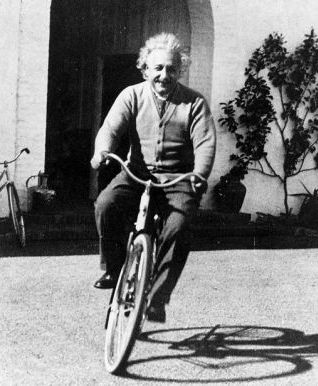
Life is Like Riding A Bike

"Life is like riding a bicycle.  To keep your balance you must keep moving."  Albert Einstein


Albert Einstein was a pretty smart fellow and not just in math and science.  When reading quotes from him, I have to conclude that he had a great grasp of what life is all about.  The quote above is certainly in line with a healthy chiropractic lifestyle.

Balance is a key to both physical and mental health.  I don't know whether Albert Einstein was referring to one or both of these areas of life when he made this statement.  Motion is crucial for health in both areas.

In physical health it's easy to see how motion is a critical element.  Motion tones our nerves and muscles and it keeps our circulatory system functioning.  As we move our body systems become coordinated so everything works together.  That is the prerequisite to having physical balance.

As a chiropractor, I am very focused on the how well my patients move.  The motion of the joints of the spine is particularly important.  Spinal joints that move either too much or too little will affect the nerves that exit the spine and go to all parts of the body.  This can lead to an imbalance in the nerves that control not only muscle activity but sensations such as pain and feelings as well as organ function.  When spinal joints loose their proper motion and the nervous system loses its balance, that is termed a vertebral subluxation.  Correcting vertebral subluxations with specific adjustments is what chiropractors specialize in.

Physical balance requires motion in more areas than just the spinal joints.  All the joints of the body must move properly and all the body's systems must be working together in a coordinated fashion.  Its the nervous system that assures the coordination of the entire body..

Being balanced mentally also requires motion.  Physical motion provides proper blood flow to the brain.  Through the blood the brain receives the oxygen, nutrients, and hormones necessary for it to work properly.  Also through physical motion the brain obtains stimulation from every part of the body.   Keeping mentally active is also necessary for to have mental balance.  Keep the mental "gears" turning through constant learning and stimulation to keep the mind healthy. 

A chiropractic lifestyle involves keeping the spine functioning properly as well as adopting healthy diet, exercise, nutrition, and sleep habit,   It's about managing physical, chemical, and emotional stresses so the body and mind can function the way they were designed to.  To be healthy we need to be balanced, physically and mentally.. Sitting in front of the TV in no way promotes balance.  Balance requires movement.  Take it from Albert Einstein, to be balanced we need to keep moving.  He was a wise man.

Tuesday, 1 January 2013

5 EASY STEPS TO BECOME UNHEALTHY IN 2013

If your New Year's Resolution is to become less healthy this year, I have 5 easy steps for you to take to reach your goal.

  1. Inactivity – Lack of physical activity will result in increased risks of circulation problems, heart disease, diabetes, digestive problems, sleep disturbances, muscle wasting, joint problems and mental health issues. It's not just physical activity you want to avoid but mental stimulation as well. Being a couch potato in front of the TV might be a great place to start.  This will minimize both your physical and mental activity levels.
  2. Poor Nutrition – Eat as much as you can of whatever looks good and tastes good. Go for high sugar, deep fried, highly salted, high calorie, processed and genetically modified foods.  Avoid natural foods, especially fresh vegetables (green = bad) and fruit.  Consuming large quantities of alcohol will also deplete your nutritional reserves.  Without essential building blocks the body is unable to repair itself and all its systems gradually breakdown.
  3. Poor Supplementation – Don't take any supplements.  Rely on the nutrient deficient foods you choose (see #2) to supply what your body needs, even though these foods don't have what the body needs.  Even more detrimental to your health is to take supplements that your body can't absorb or that are in forms that the body can't utilize. Choose low quality supplements that contain toxins and fillers. This is sure to stress the body chemically.
  4. Stress Response – Prolonged stress has been shown to be a causative factor in 8 of the 10 most costly illnesses. This includes cardiovascular disease, some cancers, gastrointestinal disorders, respiratory problems, spinal conditions, as well as mental health conditions.  So don't develop mechanisms to reduce your stress levels. Let your stresses eat away at you both mentally and physically.
  5. Nerve Interference – Don't worry about using proper body mechanics. Ignore aches, pains and stiffness in your spine.  A poorly working spine affects the nervous system, which is the master control of the entire body.   It only takes as much pressure on a spinal nerve as the weight of a dime to reduce the function of that nerve by 60%. Then every tissue that nerve goes to will be compromised. Be sure not have any chiropractic adjustments to correct vertebral subluxations and reduce nerve irritation in the spine.

I don't know which of these steps will cause the greatest deterioration in your health, but be assured that if you do all 5 of them you will definitely go downhill this year. It doesn't get any easier than that!  Going downhill is always the easy path.

But perhaps becoming unhealthy isn't really your resolution for 2013.  Do you instead want to get healthier? Then you will want to do the opposite of the things I've listed. Increase your physical and mental activity, improve your nutrition, take high quality supplements, control your stress levels, and reduce nerve interference with chiropractic care.  As chiropractors we can help you become healthier this year.

Tuesday, 13 November 2012

Forgetfulness


It's very frustrating that as a person gets older, it gets hard to remember even simple things.  Where did I put my keys? What did I come into this room for?  What did I have for lunch yesterday?  The list of what I forgot just gets longer and I'd tell you all the things that are on it, if I could just remember where I put it.  It's frustrating.

However, our memories don't have to get bad with age.  There are things that can be done to prevent, slow and even reverse age related memory loss.  Like so many problems that show up as we age, memory issues are best dealt with when we are young and before there are any signs of forgetfulness.

Memory is dependent on the proper functioning of a series of complex chemical reactions in the brain.  These reactions occur within the nerve cells and between the nerve cells.  First these reactions need to take place in order for the memory to be encoded.  Then there needs to be another series of reactions to retrieve the memory.  Any disruption in either process and we cannot remember what we wanted to.  As we age there is a tendency for the brain to produce memory related neurotransmitters which allow one nerve cell to communicate with other nerve cells.  There can also be a decline in the chemical make up of the cells themselves resulting in less efficient processing of information.  Memory is an indicator of not only how well the brain is working, but the entire nervous system.  Nervous system health is the primary focus of chiropractors.

In his book, "Brighter Mind", Kyl Smith D.C. has a four step program to prevent mental decline or to improve mental performance in those already experiencing problems.  Dr. Smith uses many scientific studies to illustrate his approach to boosting brain function.  He references over 1500 peer reviewed scientific studies.  The bottom line is that there are simple action steps that anyone can take to improve their mental capacities, including memory.  I like Dr. Smith's approach because it fits in with a healthy chiropractic lifestyle that I think is beneficial for everyone.

The four steps are to nourish, support, improve, and protect your mind.
  1. Nourish -This means to feed, maintain and support.  To function properly it is absolutely essential that the brain has adequate amounts of all the B-Vitamins, Vit. E, Vit. C, Vit. D, beta carotene, potassium, magnesium, zinc, iron, essential fatty acids, and CoQ10.  The best way to get these nutrients is from a diet consisting of unprocessed foods with an emphasis on vegetables, fruits, seeds, and nuts.  Wild fish, free range poultry, and grass fed animals are also recommended.  While it is necessary to consume foods which contain the necessary nutrients, it is equally important to avoid foods which deplete those nutrients.  In the simplest term, this means no processed foods.  Processing destroys essential nutrients while adding many chemicals which interfere with brain function.  Dr. Smith says, "A diet high in processed foods can literally starve your brain."  Inadequate brain nutrition results in poor concentration, mental fatigue, depression, learning disabilities, disturbed sleep, and loss of memory.
  2. Support - This means to assist, help and maintain.  Closely related to nourishing, supporting the brain means selecting slow release carbohydrates over sugars or carbs that are quickly converted to sugar.  Most refined grains fit into the latter category.   Consume  good quality amino-acid rich protein. Such proteins are best found in whey, dairy, eggs, fish, and beef, Yes, red meat is good to support brain function.  Omega 3 fatty acids are essential to support the brain.  These can be either plant derived or marine derived.  Those from marine sources are better because they are already in the form your brain utilizes.  A healthy cardiovascular system also supports the brain.
  3. Improve - This means to enhance or make better.  There are naturally occuring substances that will actually improve the function of the brain and they have no side effects.  These include phoshadylserene (PS), GPC (L-alpha-glycero-phosphorylcholine; yikes! Just call it GPC.)  ALCAR (acetyl-L-carnitine), and DMAE (dimethyl-aminoethanol),   Of these supplementing PS and ALCAR show the most brain improvements.  Exercise, both mental and physical, is very beneficial for improving the mind.  Good sleep is also essential.
  4. Protect - Means to guard, shield and defend.  The brain is particularly susceptible to damage from toxins and oxidation.  Oxidation is a product of metabolism in the body and is amplified by stress of all kinds.  Nutrients which protect the brain include: CoQ10, Vit. C, Vit. E, R-Lipoic Acid, ALCAR, resveratrol, grape seed extract, anti-oxidant rich berries and beans, vinpocetine, ginko biloba, rhodiola, and green tea,   This is a long list and not every person needs to consume all of these.  It is best to get most of them from a diet consisting of natural foods and then supplement with those that will specifically address an individual's situation.
The bottom line here is to improve one's diet by eating less processed foods and more vegetables and fruits, supplement to get hard to obtain nutrients and omega 3 fats, and exercise both the mind and the body.  Do this and your mind will work better.  You won't be as forgetful. 

Tuesday, 16 October 2012

3 Day Diet

Loss 20 pounds of fat!  Boost your metabolism!  Gain more energy!  Fast, efficient, effective!  Minimum work for maximum results. There is nothing like the 3 Day Diet!  Read on.

Sound too good to be true?  It is!  The scale may show a loss of a few pounds after a couple of days.  But no one really believes that being on a diet for 3 days can be effective.  There is simply no way that years of poor eating and lifestyle habits can be overcome in such a short period of time.  A person gains weight and loses their health over a long period of time and a takes time to both take weight off and restore health.

So why is it that people think that 3 chiropractic adjustments will remove the pain and restore the health of their spine?  That makes no more sense that a 3 day diet.  In most cases spinal problems are months, years and even decades developing.  Although, chiropractic adjustments can be very effective in relieving pain, to truly restore the proper functioning of the spine takes time.  Often a considerable length of time.

Changing your lifestyle to eat better and exercise more to loose weight and become healthier takes effort.  It also takes commitment to sustain the changes over a long period of time.  It is an established fact that crash dieting doesn't work and unless there are permanent changes in a person's life the weight and health problems return, only worse than they were before.  Correcting spinal problems, known as vertebral subluxations, is just the same.  Simply getting rid of the pain, with chiropractic or drugs, is just a short term fix.  The problem inevitably comes back ... only worse.

To successfully correct vertebral subluxations, and restore spinal health, repeated chiropractic adjustments are need.  As well exercise, nutrition and lifestyle changes are usually required.  A healthy spine is needed to have a healthy body and a healthy body is needed to have a healthy spine.  This takes time and effort.

Forget about 3 day diets.  There is no way they can work.  Forget about trying to get a healthy spine in 3 visits.  It simply can't happen.

Tuesday, 4 September 2012

Habits

A habit is defined as an acquired behavior pattern regularly followed until it has become almost involuntary.  Habits allow us to do the majority of our actions without putting a lot of mental effort into them.  This is a good thing.  We don't have to put effort into how we are putting our clothes on or each step that needs to be done to start the car to go to work.  Instead we can put our mental energy into picking an outfit with colours that don't clash or what our day's activities are going to be.  By committing the many little things we do over and over to habit allows us to perform activities while freeing our mind to focus on other things.  Consequently, if the habits we develop are "good" habits, we become more efficient and effective.  If however we develop "bad" habits they will cause us to be less effective and even self destructive.

Each person has developed both "good" and "bad" habits.  We can be happier and more successful in life by changing our "bad" habits to "good" habits.  Sounds simple doesn't it?  But just ask someone who has an alcohol habit, or a sugar habit, or a procrastination habit if it's easy to change the habit and they will tell you it is not.  Even changing a small habit can take a tremendous amount of effort.  In order to change a habit a person needs to understand how habits work.

There are three components to each habit: a cue, a routine, and a reward.  I'll let Charles Duhigg explain how these habit components work together.  Take a look at his video "How to Break the Cookie Habit" posted on the New York Times website.

Changing a habit requires that a person recognized all three components.  That's easier said than done.  Personally I think determining the reward is the hardest part.  What we truly gain from our bad habits is usually not obvious.  In many instances a person really needs to be a sleuth to pin down the reward and sometimes the cue as well.  

This is a very brief overview of habits.  If you are serious about wanting to change your habits please read  "The Power of Habit" by Charles Duhigg.  This very readable book will give you a comprehensive understanding of how habits work, how we develop them, and very importantly how we can change them.

Wednesday, 29 August 2012

A Time for Resolutions

Around New Year's there is usually a lot of talk about resolutions for improving oneself.  September is perhaps a better time to be looking at making changes in one's life.

Here in Southern Alberta, summer is fast and furious.  We try to do as much as we possibly can in the weekends of July and August as well as during the long summer evenings.  It's the time when everyone goes on holidays to see and do something new.  While we endevour to experience so much of what the world around us has to offer, we often neglect the things that are really important to our health.   Routines for healthy eating, exercise, and rest are often cast to the side.  Frequently people neglect their spinal care as well.

Then September arrives.  Back to school; back to routines; back to reality.  The lazy (or not) days of summer have come to an end and it's time to return to normal activities.  It's also time to return to healthy routines.  Because September is a time when we are changing from summer mode, this may be a more logical time to make healthy lifestyle changes than the beginning of January.  So many of the routines people are returning to are healthier than what they have been doing over the summer.  (Think about that old song about "sodas, and pretzels and beer" during "those lazy, hazy days of summer".  That's a description of many people's summer.)  While people are already making changes, perhaps they should take it a step further and make some real significant lifestyle changes.

September is a great time to make healthy diet changes.  There is an abundance of fresh fruit and vegetables, many of them locally grown.  A commitment to ditching the simple carbohydrate foods and drinks for good would be a wonderful step to take.  Eat enough of the good stuff and you'll want less and less of the bad stuff.  Fortunately quality fruits and vegetables are now available year round, so a habit started now can continue through the winter.

Because the weather is still warm, but no longer swelteringly hot, September is a great time to get outdoors to exercise.  Exercising in the fresh air is good for body and spirit.  Get in the habit of exercising now when it's easy to do and you'll be more likely to continue even when the weather becomes less than cooperative.  It takes much more effort to start an exercise routine in January.

As you get back to routines, it's important to once again commit to getting regular chiropractic checkups.  Or if you haven't done so in the past this is the time to start.  Vertebral subluxations can creep up silently and have a profoundly negative impact on a person's health.  The best time to have them corrected is before they become symptomatic.  Regular visits to a chiropractor will assure that your spine is working as well as it can be.

This fall don't just get back to the same routines of spring but add some new, better ones.  Improve your sleep routines. Commit to taking high quality supplements on a regular basis. Embrace techniques to reduce stress. This may be the ideal time to start a new hobby. Rather than watching more TV this fall, look for more active ways to spend your time that will benefit you both physically and mentally. This time of year many organizations are looking for volunteers and committing some time and effort to helping others is very rewarding.

Take advantage of the season and make some resolutions to be a better you.

Tuesday, 14 August 2012

In It for the Short Term

My wife and I have a small cabin that's been in her family for the past 50 years.  In the village where the cabin is located there a currently a number of cabins for sale.  (One is pictured here.)  There is definitely a pattern in cottagers I've noticed over the years.  People buy a cabin and they are so excited by the new adventures and opportunities they see in their new purchase.  They have wonderful dreams of family times and development projects.  The first year they are at the cabin every opportunity they get and they are busy renovating and making the place their own.  The second season again sees a flurry of activity at their cabin.  Come season three there is usually a significant decline in both attendance and projects as the reality of both how time consuming, costly and labour intensive a cabin can be sets in.  After that many cabins are either used sparingly or go up for sale again.  The cost to reward ratio becomes too great in the minds of many cabin owners.

This phenomenon reminds me so much of what I see in people who embark on changing their lifestyle to either exercise more or improve their diet.  They start out gung ho on their new diet or exercise program with great dreams of being healthy.  Once they realize how much work is involved in changing their lifestyle they abandon the changes that held such promise for them.  It takes emotional effort to make and stick with healthy lifestyle changes.  Time must be committed to exercise and good food preparation.  Maintaining a healthy lifestyle when those around you and most of society drift toward ill health can be a challenge.  Unfortunately, short attention spans and short term goals seem to be an ever increasing norm in our society.  Too often people never stick with one thing long enough to see the true value in it.

To enjoy a cabin for the long term a person has to have a clear goal of what the retreat will be for them over time.  They have to count the costs not only in dollars, but also in time, physical and emotional terms.  The rewards have to out weigh the costs or the dream will be abandoned.

It is the same with making lifestyle changes.  The rewards of improved health, weight loss, etc. have to be worth the financial, emotional, and physical costs.  Long lasting results will never be obtained by making short term goals or by making goals that do not have a big enough reward to make the effort worth while.  A committment level needs to be established that will sustain a person through the tough times that will inevitably come.

My wife and I have enjoyed our cabin for many years and plan to enjoy it for a long time to come.  We also realize that the ability to continue to have pleasurable cottage experiences we need to be prepared to pay the costs in time, money, energy and emotions.  Likewise anyone wanting to experience long term good health must be prepared to pay the costs.  It is worth the effort.

Wednesday, 25 April 2012

A Get Healthier App


Choose the adversary you want to slay - weight, fitness, food choices, or all of the above.  Set up a strategy to defeat the enemy.  Get points for each step forward.  Master a level to get meaningful rewards you define. Recruit friends to help you win and you help them.  Cover each others backs.  Get online support from others who are trying to slay the same adversary.  Share your daily challenges and victories.  Plays like a game, works like a tool.

Tools help us to be more effective and efficient.  The right tools make difficult projects possible and unpleasant tasks more enjoyable.  When it comes to making healthy lifestyle changes, good tools can be tremendously beneficial.  A new free app has recently become available that has the potential to help many people become healthier.  It's called SlimKicker (www.slimkicker.com).

SlimKicker is a game, a social network, a support system, an online diet, a motivational system, and a lifestyle educator all in one package.

Want to lose weight?  You need to know what you're eating and how much you're eating.  Unless you log what you eat you really don't know how much you are eating.  Most people under estimate the amount of food they consume.  SlimKicker contains an extensive database of foods with their calories and content.  You can also add your own recipes and foods.  Keeping track of food consumption is almost fun with SlimKicker.  

Want to eat healthier?  SlimKicker keeps track of not only calories but carbs, sugars, fats, protein, and fiber.  This information helps a person make positive changes in their food choices.  Points are awarded for making healthy nutritional choices.

Want to get in better shape?  Log your activities.  SlimKicker encourages a person to not only burn calories but to do strength training as well. Both are essential to becoming physically fit. Like the food database, there is also an extensive listing of exercises. 

Two sections of SlimKicker that have tremendous potential for helping people achieve their goals are the connections with other people on the same journey and the challenges.  People on the "Inspirational Feed" and "Groups" share their victories and defeats.  This is very motivational!  No need to feel alone.  For anyone with even the slightest competitive spirit, the "Challenges" contain great ideas for making healthy lifestyle changes.  "Challenges" include food choices, willpower, motivation, exercise, spiritual needs, and stress reduction.  A person can also design their own "Challenge".   Taking on challenges, not only moves one forward toward slaying the ultimate foe, but they are are great way to get points.  Remember this is not just a tool, but a game as well!.

My wife and I have both been using SlimKicker for a few weeks now and we are very much enjoying it.  It is motivational and is keeping us on track toward improving our health.  It is a great tool.  The encouragement from other people is always appreciated.  Plus ... bwahaha ... I have more points than her this week and I leveled up!

Monday, 26 March 2012

How Do You Eat an Elephant?

If you haven't watched the online documentary "Hungry for Change", you really need to take the time to do that.  It has a wealth of fabulous information about the foods we eat and most importantly how we can eat to be healthier.  A very compelling case is presented for why our society is so overweight and is suffering from so many chronic diseases.

The movie focuses mostly on the impact our diets have on our health.  There is mention of other things that we need to also get right if we are to experience true health.  Health that comes from the inside out and is not just cosmetic or a false front.  Health that provides real vitality and the strength to withstand the physical, chemical and emotional stresses of life.  To achieve such health requires attention to physical, mental and spiritual needs.  None of these areas can be neglected, for we are only as strong as our weakest link.

So to be healthy you need to not only eat right, but to drink right, sleep right, think right, move right, poop right, and talk right.  Those are Rakowski's Magnificent 7.  Plus you need to have a spine that has no vertebral subluxations.  That assures the nervous system is free from any interference that could compromise your health. Chiropractic adjustments are the only procedure specifically designed to correct vertebral subluxations.  The solution is to develop a lifestyle that promotes health by addressing all these factors.  Notice I use the term develop.  It implies that this is a process.


Does this seem like you have to juggle a lot of balls in order to be healthy?  Before you become too overwhelmed, remember the old riddle:
     Q: How do you eat an elephant?
     A: One bite at a time.
The same principle applies when changing your diet or when becoming healthier.  Take one bite at a time.  Every bite of healthier food you take means one less unhealthy bite you will take.  Every action you take toward being healthier means one less unhealthy action you will take.  The effects become compounding.  Celebrate each little step forward.  Today you ate healthier than yesterday.  Today you took more steps to promote your health than yesterday.  Tomorrow you can again take some small positive bites.  Take small steps forward every day and in a couple of months you will be eating better and you will be a healthier person because you are developing a healthier lifestyle.  One bite at a time.

Friday, 9 March 2012

Staying Off the Treadmill

No, this is not an anti-exercise post.  The treadmill I'm referring to today is about running to get ahead but ending up going nowhere.  Specifically it's the medical treadmill I'm going to talk about.  It's the treadmill people find themselves on when they run from doctor to doctor, take test after test, are subjected to procedure after procedure, and take drugs followed by more drugs looking while looking for help with their health problems.  It's a treadmill that wears people down.  I see young people stressed into anxiety and depression, middle aged people worried to the point of developing new illnesses, and seniors totally exhausted physically and emotionally from being on this treadmill.  I also see people of all ages who have made a conscious effort to either stay off the treadmill or get off it once they recognize they are on it.  These people are both happier and healthier than those who are continuing to run.

I must let you know that I am not against tests, procedures and medications.  I am against tests just for the sake of running tests.  I'm against invasive procedures conducted before conservative methods are exhausted. While prescription medications can be absolutely essential for treating many conditions, they invariably have side effects.  These side effects usually necessitate additional testing and in very many cases more medication to treat the side effects.  The cycle of testing and medicating can become relentless; like running on a treadmill that can't be stopped.  This is especially true for chronic conditions for which medicine has a poor track record of treating.

Staying off the medical treadmill can be a daunting task.  The first step is to acknowledge that you are the person responsible for your health.  You can seek the advice of others and partner with other people, including doctors, but you must make the decisions regarding your health.  This is a crucial step.  It means you must become informed about your health situation.  You need to explore your options and  weigh the risks and benefits of any tests or treatments.  There are times you will need to say, "No".  No one but you can decide what is best for you.

The second step is to adopt a lifestyle that promotes health.  The best way to stay off the medical treadmill is to not get sick in the first place.  I've talked about lifestyle in several previous posts, but let me quickly list a few of the basics.  You need to eat nutritious food, drink plenty of water, avoid toxins, get adequate rest, manage stress, maintain good relationships, attend to spiritual matters, exercise, and look after your nervous system.

Now maybe you've had the misfortune of already having your health compromised through injury or illness.  You can get off the treadmill.  You must first go back to step one and take responsibility for your own health.  You need to become the decision maker.  Do your homework and find out as much as you can about what is afflicting you.  Research the treatment options.  Look for treatment methods that work with your body and aren't going to cause side effects.  Look for professionals you can partner with to help you reach your health goals.  Make lifestyle changes that will strengthen your body so it can heal itself.  The body is marvelously self healing when it's given the proper environment to do so.

In more than a quarter century of practicing chiropractic, I've observed many, many people enjoying wonderful health in their advanced years.  Invariably they are the ones who have made an effort to stay off or get off the medical treadmill.  They have decided to take responsibility for their own health.  As a chiropractor I count it a privilege to be able to partner with these people.  I advise them on lifestyle changes that will promote their health.  I also assure that there is no interference to the proper functioning of their nervous systems by adjusting their spines to correct vertebral subluxations.  Chiropractic allows the body to heal itself.

Tuesday, 21 February 2012

Dangerous Thoughts

Probably all professions have a mental stumbling block that keeps many in the profession from truly excelling.  In chiropractic we see so many nearly miraculous changes in our patients' health on such a frequent basis, that we fall into the trap of thinking we are healers. This is dangerous because in fact we heal nothing.  The body does the healing and the chiropractor is just a facilitator.  

Thinking I'm the healer is a trap I've fallen into many times and something I must be vigilant to guard against.  It's not good for either me or my patients.  Patient's are too often eager to give me credit for results.  "You are a miracle worker, Doc."  It really appeals to the ego to think I have healed someone.  What a sense of power!  Maybe I have some special power!  Nothing can stop me!  I begin to think I'm god-like.

This is a dangerous place for me, or any other chiropractor, to be for a number of reasons.  First, the emphasis is misplaced.  Instead of the chiropractic encounter being about the patient it becomes about me, the doctor.  The focus is about what I'm doing instead of what the patient needs.  It becomes my success not the success of the patient.  

When patients fail to get fabulous results the wrong thinking chiropractor faces a dilemma.   I feel compelled to do more procedures in an attempt to get results.  Because I feel I am the one producing the healing, when the patient doesn't respond it suddenly becomes my own personal failure.  In an attempt to still be the healer additional procedures are added or another technique is tried. Results are usually marginal, because the innate healing power of the body is ignored.   The body often responds better to less rather than more because its healing energies can be focused.  The healer in me wants to do more so I can get the credit.

When I hold myself up as the healer I also deny the patient's right to participate in the healing process.  If patients have no involvement in the healing, then they have no responsibility.  In reality each individual must accept responsibility for the actions they have taken that have affected their health to this point.  They must also accept responsibility for any present and future actions for improving their health.  Becoming healthy is not an event, but a lifestyle.  A chiropractor can partner with a patient, but the patient must take the steps to move forward.


It is not my responsibility to heal the patient's body.  It simply isn't possible for me to heal anyone.  Only the body can heal itself.  A chiropractor's responsibility is simply to remove interference to the healing process.  Anytime I (or any other chiropractor) think I am the healer, I am in dangerous territory.   It's bad for me and for my patients.

Tuesday, 24 January 2012

Massage Therapy

To say I was over due for a good massage was an understatement.  I usually have a therapeutic massage every 3 - 4 weeks.  It had been almost 8 weeks.  When I go that long been massages, the experience is not usually real pleasant.  My muscles tighten up too much over that length of time.  It is easier on both me and the therapist when I get massaged regularly.  The massage therapists at Powers & Jans Centre don't usually have mercy on me either, so I try to avoid neglecting my massages.

There are good reasons to get a massage regularly.  Therapeutic massage produces a host of beneficial effects in the body.  These include improving flexibility, muscle tone, blood flow, and lymphatic drainage.  This helps promote soft tissue healing.  Massage helps to increase dopamine and serotonin levels in the body enhancing a person's sense of well being.  The immune system is also stimulated.  Massage is also extremely beneficial in stress reduction.

As chiropractors we find that therapeutic massage works very complementary to our chiropractic adjustments.  We regularly coordinate massages and adjustments for a variety of conditions including headaches, neck pain, back pain, and sprains/strains.  Shoulder, arm, hip, knee and leg problems also benefit from combined treatments.


From my personal stand point, I function better when I get a therapeutic massage on a regular basis.  Not only are my muscles less tense, but my overall motion is improved.  As part of an overall strategy to maintain health, all of the benefits listed above are important.  Having a healthy lifestyle involves putting together many pieces, all of which lead to the end result of health.  No one thing will make us healthy.  Therapeutic massage can be a very valuable component of a healthy lifestyle.  It certainly is for me.


Even though I regret that it was so long between massages, Amanda was kind to me.  There were a few areas that were quite sore as she worked on them but I felt so much better when she was done.  I promise Amanda, I won't go so long between massages again. 

Tuesday, 17 January 2012

From the Inside Out

At my latest eye exam, my optometrist gave me a brief education session on retinal scans.  He described what he looks for and showed me normal (my eyes) along several abnormalities from other scans he has done.  The information he garners from these retinal scans is impressive.  They offer a glimpse to the inside of the body.  As the discussion progressed he described how, for the most part, the retina is really just a reflection of the health of the rest of the body.

Circulatory problems in particular show up very readily in the eye.  Retinal scans of smokers are definitely not pretty because of oxygen deficiency.  Liver and kidney problems are also reflected in the health of the retina.  The key take-away point is that the eye cannot be separated from the rest of the body.  This is true for every part of the body.  It's all connected.  If you want to have healthy eyes, you need to have a healthy body.  Your eyes cannot be younger than your liver, kidney or bowel.  

This concept is important when we evaluate all the "anti-aging" products and discussions that abound.  All parts of the body are the same age.  "Anti-aging" cannot be applied successfully to one area and not the others.   Look after the health of the whole body and all it's parts will be healthier.  When we are healthy we function like we are younger.

One of the foundational principles of chiropractic is that health comes from above, down, and inside, out.  Health doesn't come from outside the body (although what comes from outside can affect health).  Only the life force within us can heal us.  Only the life we have can produce health.  If we are unhealthy on the inside we will not be able to manifest health outwardly, no matter how many lotions or potions we apply or consume. 

Because the nervous system controls every function in the body, it's important to assure that there is no compromise in this system.  Chiropractic's specialty is to remove interference from the nervous system using specific chiropractic adjustments.  Combined with a lifestyle that promotes health, chiropractic is a vital part of being healthy.  Chiropractic works with the body to allow health to manifest from above, down and inside, out.